
DP in the Deep Blue Sea
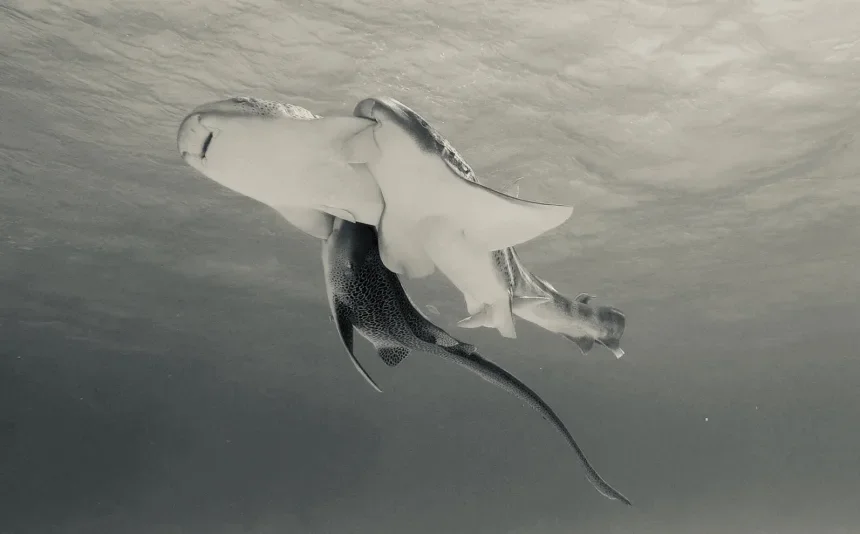
Behold the wild world of romance under the waves: A trio of glamorous marine suitors took centre stage in the shimmering sands off New Caledonia, not your usual candle-lit dinner, but rather a rather choreographed aquatic frolic starring the endangered Indo‑Pacific leopard shark (also known as the zebra shark) and two eager male principals. This was not your usual fishy flirtation. For the first time ever, scientists recorded two males sequentially mating with a single female, clocking in at 63 seconds for the first and 47 for the second, fast by shark standards, but still significantly more commitment than some past suitors showed on a first date.
The scene: A marine biologist from the University of the Sunshine Coast, Dr. Hugo Lassauce, patiently snorkeling offshore, perched above the sandy seabed with his GoPro and a fair dose of hope. He spotted the female being gently (or not so gently) gripped by pectoral fins of the two males. After roughly an hour of waiting (chilly water ≠ romantic spa), the action commenced. One male hopped in, took his turn, ran out of steam; the second finished the act; then the female swam off like she had better things to do. The males? Flat on the sand, totally spent. Yes: even sharks can get post-coital exhaustion.
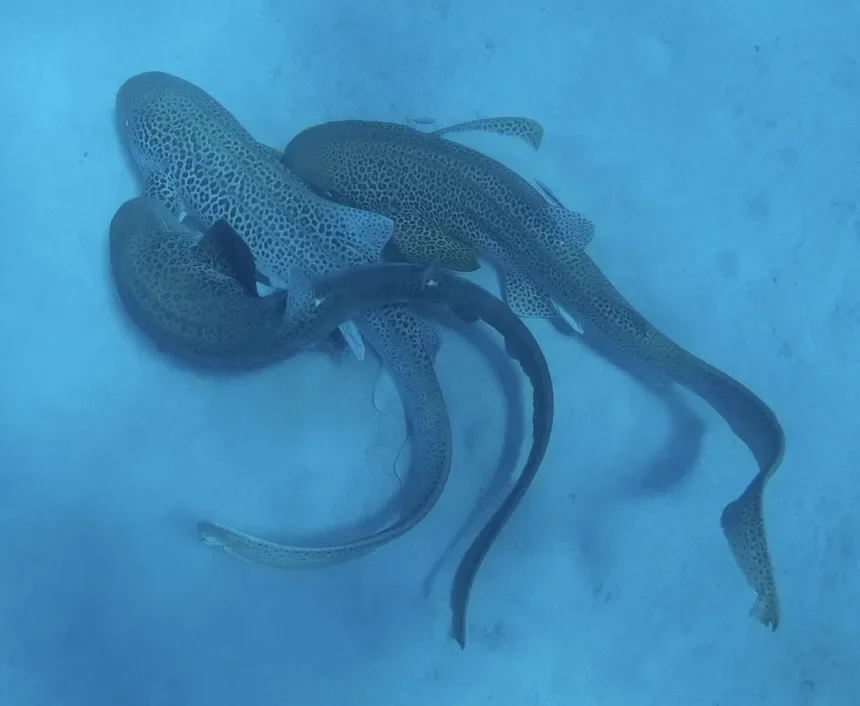
From a science-and-conservation perspective, this isn’t just a juicy anecdote. Because this species has been hardly studied in the wild (most mating observations were aquarium-based), this footage offers real insights into how these sharks reproduce. With populations declining thanks to overfishing and habitat loss, understanding who mates when and how often matters for conservation, rewilding efforts, and keeping the species from disappearing altogether.
And yes, the behaviour hints at female choice, genetic diversity, and multi-male contributions to a single clutch of eggs. In plain English: she may be seeing multiple love interests, and scientists are curious how many of the little sharklets are sired by more than one male. The drama of the ocean.
So next time someone tells you “sharks don’t do romance,” remind them: the Indo-Pacific leopard shark just gave us a full-on ménage a trois in 110 seconds of marine science glory.
Nature’s original pornographic show.
