
Learning from Our Past: Nana Darkoa Sekyiamah on Sexual Freedom in African Traditions
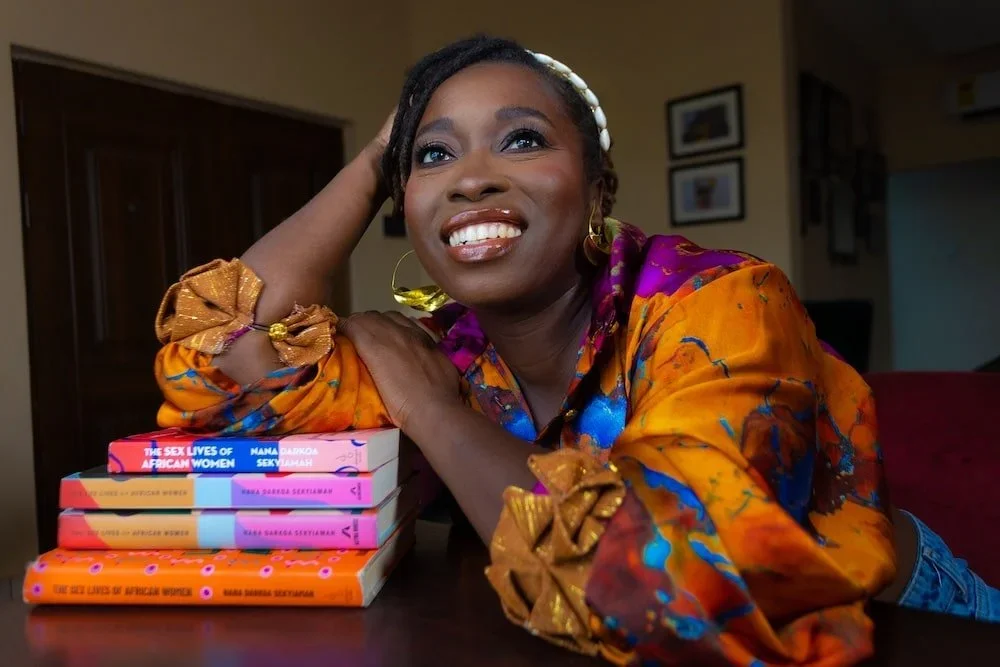
Nana Darkoa Sekyiamah made waves in the sexual health scene five years ago, just after she published The Sex Lives of African Women. The book left a lasting impression on many, not only because of its honesty, but because of the surprising and quietly radical ways women across the continent spoke about sex, pleasure, and agency.
Now she’s returned with a new book, Seeking Sexual Freedom: African Rites, Rituals and Sankofa in the Bedroom and it’s clear she’s entering a new phase of her work. Where her previous writing documented contemporary experiences, this book looks further back, into traditional practices and rites of passage across African cultures, to explore whether the past might offer unexpected blueprints for sexual freedom today.
Those who know Nana describe speaking to her like sitting down with a sex researcher who also happens to be a storyteller. In Seeking Sexual Freedom, she explores ceremonies, rituals, and customs that historically prepared young people, especially girls, for adulthood, relationships, and sexuality. She asks a provocative question: could Indigenous traditions offer a more expansive approach to sexuality than the Abrahamic religions that later became dominant across much of the continent?
The idea surprised me as North African rites of passage around sexuality were mostly defined by silence. Young people were expected to simply figure things out themselves. But Nana spent years speaking with women across Africa and the diaspora to uncover traditions that were either forgotten or rarely discussed openly.
Some of what she found is explicit, but it’s also deeply fascinating.
Puberty Rites and Learning the Body
One example she explores is the Ghanaian tradition of Dipo, a ceremonial rite marking a girl’s transition into womanhood at puberty. In the book, Nana recalls how her own introduction to menstruation was brief: a plate of yams from her mother and a warning not to “play with boys.”
Yet in communities where Dipo is still practiced, the process can be far more elaborate. Girls are adorned with beads, their heads shaved, and they participate in symbolic rituals meant to represent maturity and readiness for adulthood. Alongside the ceremony, they receive instruction about hygiene, responsibility, and the expectations placed on women.
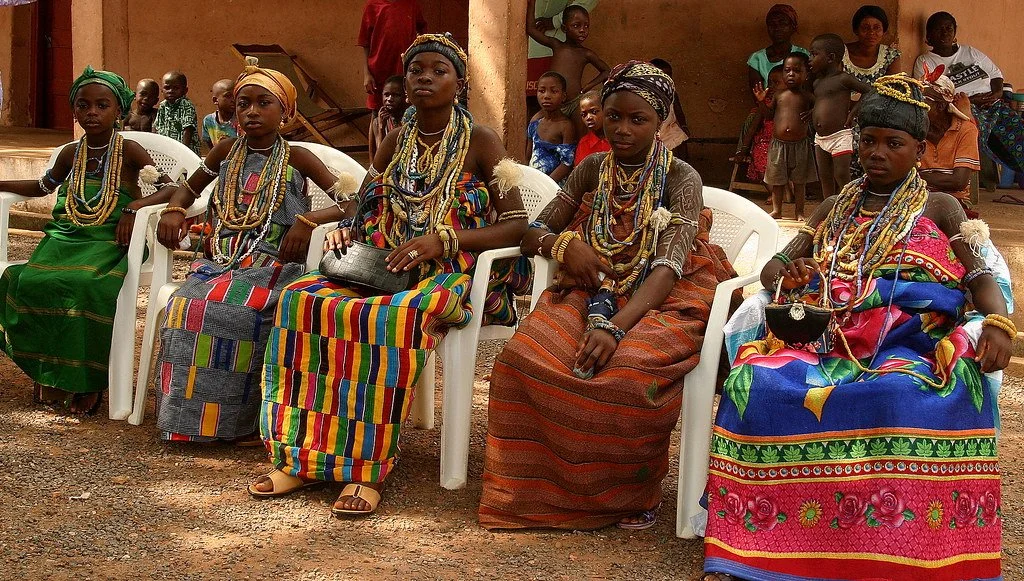
Nana acknowledges that many of these traditions contain problematic elements, particularly the emphasis on purity and virginity. But she also found women who remembered the rites fondly, especially the sense of community created by gathering with other girls and older women.
That sparked a question for her: what if these spaces had included conversations about pleasure, not just morality?
The “Sex Auntie”
Another practice she encountered in her research comes from the Baganda community of Uganda, where an elder woman known as the ssenga traditionally guides young girls into adulthood.
The ssenga, often an aunt, has an explicit role: teaching her niece about relationships, intimacy, and sexuality before marriage.
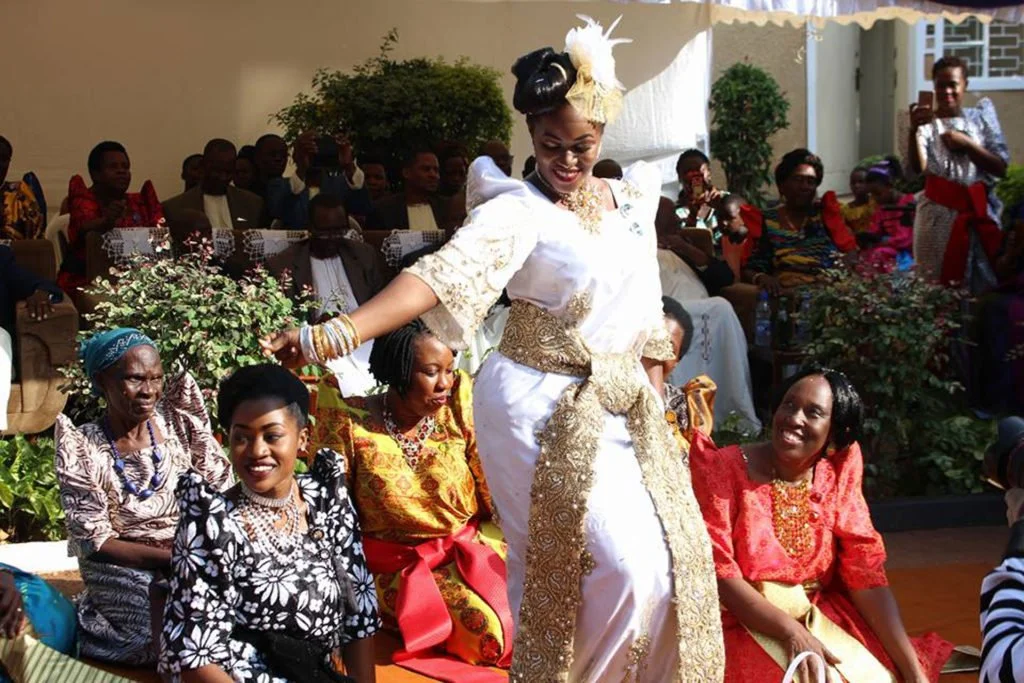
Nana loves the idea of what she calls a “sex auntie.” Many people grow up with parents who feel uncomfortable discussing sex openly. But a trusted relative or mentor can fill that gap, someone who speaks candidly, answers questions without shame, and encourages curiosity rather than fear.
In her research, she encountered women who recalled moments where their ssenga gently normalized sexual feelings or curiosity. One woman described leaving the room during a romantic scene in a film out of embarrassment, only to have her aunt call her back and ask if the moment stirred anything in her. If it did, the aunt told her, that was something worth talking about.
For Nana, the idea is simple: if parents struggle with these conversations, why not entrust them to someone who can approach them with honesty and care?
Learning the Body
One of the most striking traditions Nana writes about involves labia elongation, sometimes called “pulling,” practiced among some Baganda communities. Girls are taught techniques intended to lengthen the inner labia, which in that culture has historically been associated with sexual attractiveness.
The practice is controversial, and Nana does not romanticize it. But what struck her during her research was the way it introduced young girls to their bodies. Through instruction from older women and conversations with peers, they became familiar with their anatomy, something many women worldwide still lack.
For Nana, this challenges a common assumption. When people think about African traditions involving female genitalia, discussions often focus exclusively on female genital mutilation. Yet the continent’s cultural practices are far more diverse and complex.
In the Baganda case, she observed something unexpected: girls learning about their bodies together, touching and examining themselves with curiosity rather than shame.
It’s here that Nana invokes the Akan concept of Sankofa, a Twi word that roughly translates to “go back and fetch it.” The idea is that societies can revisit the past to recover valuable knowledge that may have been lost.
Recovering Forgotten Possibilities
Nana’s work has evolved from documenting modern sexual experiences to excavating the cultural histories that shaped them. In doing so, she argues that colonialism, religion, and urbanization often erased or reshaped traditions that once treated sexuality with more openness.
Her goal isn’t to recreate the past wholesale. Instead, she hopes to reclaim what was useful, the mentorship, the communal learning, the acceptance of pleasure, while discarding practices rooted in control or inequality.
Ultimately, Nana’s project is about possibility. If earlier generations created cultural frameworks that acknowledged the body, desire, and pleasure, perhaps those ideas can be reimagined for the present.
“We are not starting from nowhere,” she told me. “We are starting from a base.”
And sometimes, moving forward begins by looking back.
